Activities for Dementia Patients at Home
The best activities at home are rarely special projects. They are small, familiar jobs and pleasures from a whole lifetime: folding towels, sorting buttons, an old song on the radio. Here are 40 of them, grouped by what the day calls for, each with one line on how to do it.
What makes a home activity work
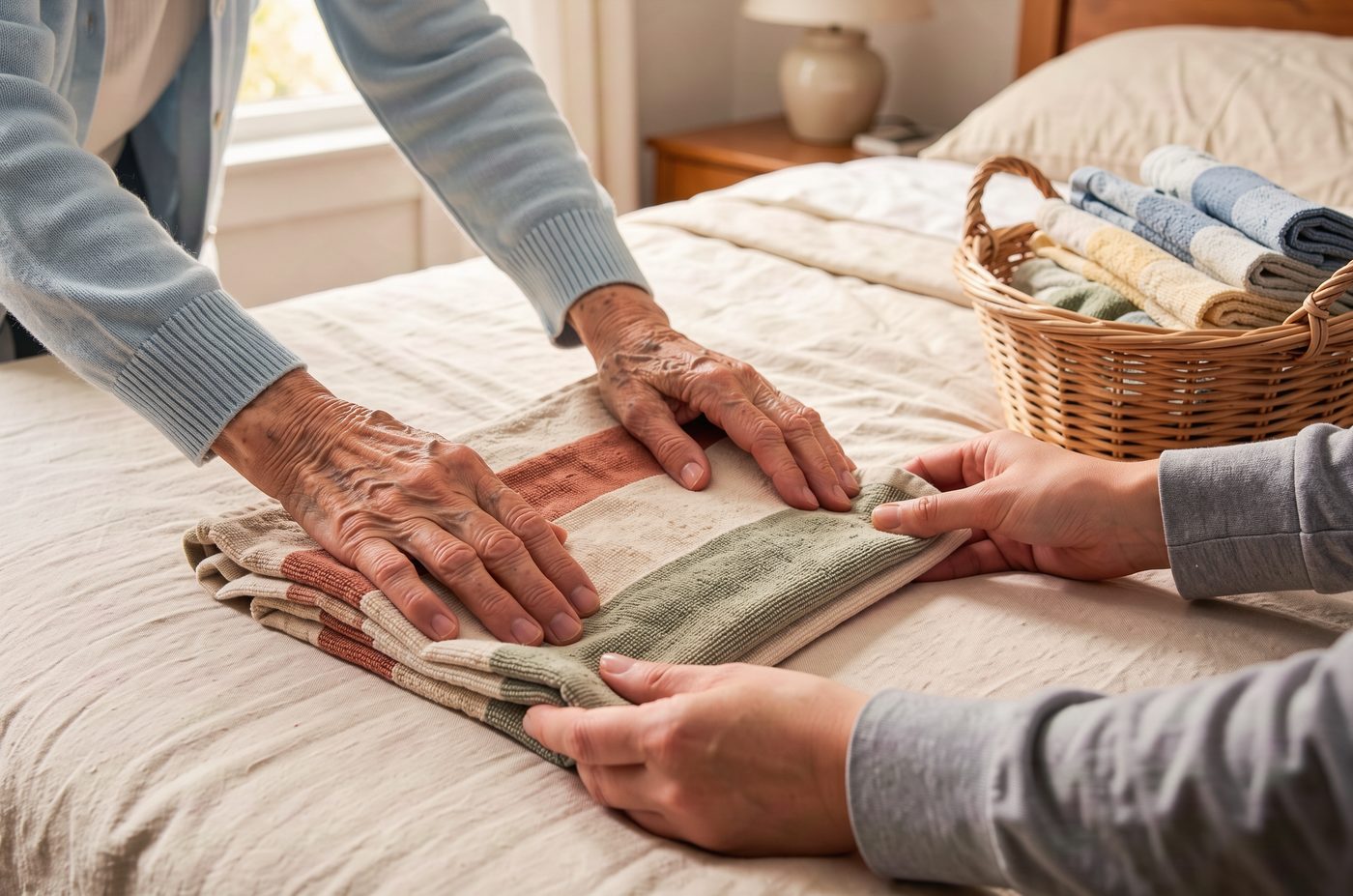
A good activity for someone living with dementia feels like real life, not like therapy. Folding laundry that the family will actually use carries a quiet dignity that a worksheet does not. Look for things that use the hands, that cannot be done wrong, and that connect to the work and pleasures of earlier years. A woman who kept house for fifty years may relax the moment a basket of warm towels lands in her lap.
Keep it short and unhurried. Set the activity up so it is ready to go, then do it alongside rather than handing it over and walking away. If something does not take today, try it again another week. Moods change, and so do good days.
Talk as you go, but make it easy. "Tell me about the kitchen you grew up in" invites a story. "Do you remember...?" asks for a right answer and can make a good moment tense.
40 activities to try at home
Activities for dementia patients with limited mobility
Everything here can be done from a favorite chair or at the table, with the materials brought close.
- Fold warm towelsHand over a basket straight from the dryer. There is no wrong way to fold.
- Snap green beansOne bowl in the lap for the beans, one for the ends. The beans go into supper.
- Sort a button jarPour buttons onto a tray with a rim and sort them by color or size into muffin tin cups.
- Read through a recipe boxRead the cards aloud and ask about the ones with the most stains and notes.
- Balloon toss from the chairBat a balloon back and forth. It floats slowly, and nobody has to chase it.
- Arrange flowersA bunch of grocery store flowers, a vase of water and a pair of blunt scissors.
- Polish the silverwareA soft cloth and a few spoons. The shine is the reward.
- Water the houseplantsBring the plants to the table on a tray and let her give each one a drink.
- Hand massage with lotionWarm the lotion in your hands first, and go slowly, with quiet music on.
- Window watchingPull a chair to the window and talk about the birds, the cars and the weather.
Activities for dementia patients with poor eyesight
These lean on sound, touch and smell, so nobody has to squint.
- Play the old songsPut on music from her teens and twenties and sing along. Forgotten words do not matter.
- Listen to an old radio showComedies and short dramas from the radio days are made to be enjoyed with eyes closed.
- Feel-and-guess bagPut a few familiar things in a cloth bag: a spool of thread, a key, a pinecone, a clothespin.
- Smell jarsCinnamon, coffee, lemon peel and vanilla in small jars. Ask what each smell brings to mind.
- Knead bread doughThe warmth and give of the dough is the whole activity. Bake it afterward if you like.
- Read aloud to herLetters, short poems, a psalm, or a chapter of a book she loved.
- Clap to the beatMarches, hymns and polkas have a strong beat that is easy to follow with hands or feet.
- Sort socks by feelWool, cotton, thick and thin. Pairing them by touch is satisfying work.
- A "tell me about" chat"Tell me about the house you grew up in." Then just listen. No pictures needed.
- Big, bold photo cardsPrint a few family photos large and glue them to cardboard so they are easy to hold and see.
Activities to keep hands busy
For restless hands that want something to do, especially when sitting for a while.
- Fold napkins or washclothsA small stack to fold, unfold and fold again. Repetition is fine.
- Wind yarn into a ballHold the skein on your hands while she winds. It is a two-person job, the old way.
- Sort coinsA jar of pennies, nickels, dimes and quarters to sort into cups or roll into wrappers.
- Sand a block of woodFine sandpaper and a smooth piece of pine. Feel how it changes as you go.
- Match lids to containersEmpty a drawer of plastic containers onto the table and find each one its lid.
- A busy board or apronSew or fasten zippers, buttons, snaps and a buckle onto sturdy cloth to work with.
- Thread large beadsWooden beads on a cord make a simple necklace or a key chain for a grandchild.
- Sort playing cardsShuffle a deck and sort it by suit or into reds and blacks.
- Clip coupons or picturesA store flyer or a seed catalog and a pair of safety scissors.
- Pull weeds in a planterA pot of herbs or flowers set on the table, with a few weeds left in on purpose.
Activities for the late afternoon
Many families find late afternoon the hardest stretch of the day. A calm, familiar routine at that hour can make the evening easier for everyone.
- Turn the lights on earlyClose the curtains and switch on the lamps before it starts to get dark.
- A short walkOnce around the block, the yard or the hallway, at her pace.
- A warm drink togetherDecaf coffee or herbal tea at the table, with a cookie, at the same time each day.
- Soft, familiar musicGentle songs she has known for years, played low.
- Fold the day’s laundryAn easy, useful job that fills the restless hour.
- Set the table for supperPlates, napkins and forks: a job with a clear purpose and a clear end.
- Look at photos without quizzingTurn the pages of an album and talk about what you see. Never ask "Do you remember?"
- Brush her hairSlow, gentle strokes, the way someone once did for her.
- Time with a petPetting a calm dog or cat, or holding a soft blanket in the lap. Simple and quiet.
- Sweep the porchOr wipe down the kitchen table. A small chore that feels like helping.
More free pages
Something ready for every morning
A new page every day, made around her name, her hometown and her family. One less thing to plan.